

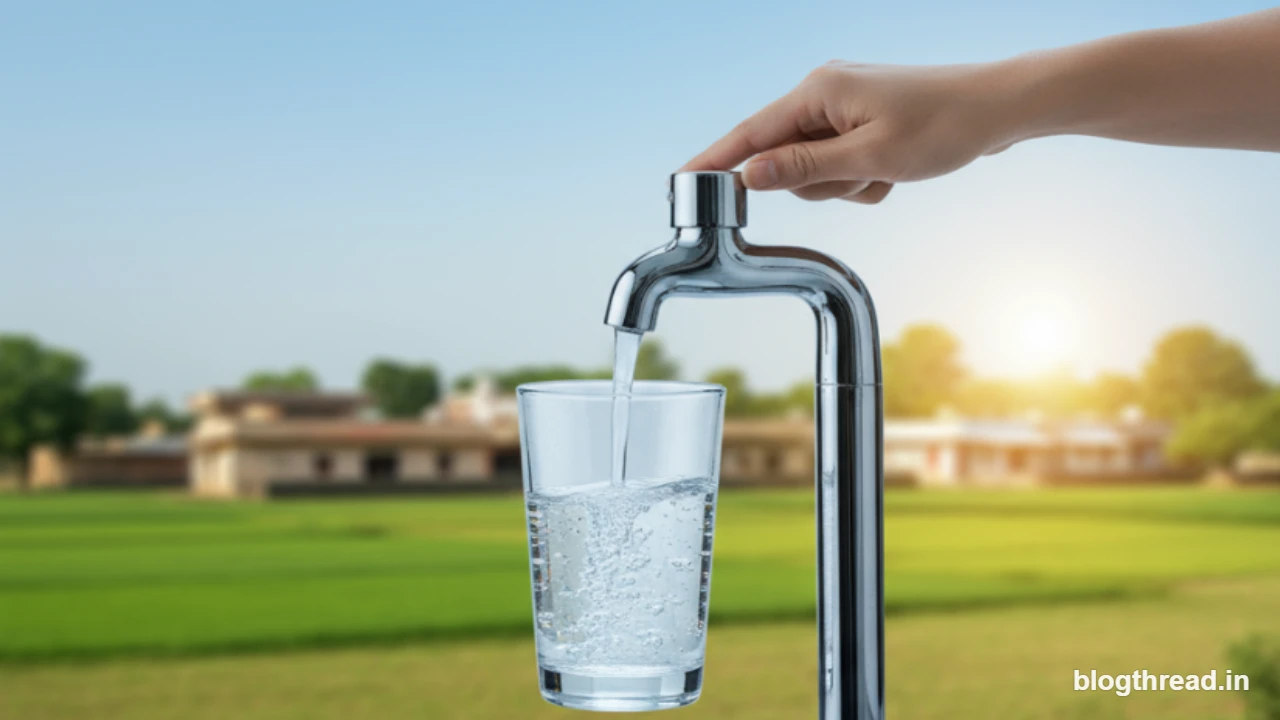
JJM’s new rural milestone
India’s Gramin Jal Jeevan Mission has crossed the 5 crore mark in cumulative rural households reached in the current phase of implementation, underscoring steady progress in last-mile water delivery and laying the groundwork for near-universal tap connections by March 2026. The latest push focuses on functional, regular, and quality drinking water at household taps rather than just pipeline length or asset creation.
The programme’s on-ground approach—decentralized planning, village-level committees, and constant water quality monitoring—has helped many districts accelerate connections while curbing slippages. With field audits and digital dashboards improving transparency, states are being nudged to prioritize quality-affected, drought-prone, and aspirational blocks.
Why March 2026 matters
While the mission initially aimed for universal coverage earlier, the recalibrated timeline of March 2026 aligns capacity, funding, and O&M readiness so that new connections stay reliable beyond inauguration day. This shift recognizes that true success is measured by regular pressure, potability, and affordability—not just a tap installed.
To meet the date, states are sequencing village schemes with source sustainability—rainwater harvesting, aquifer recharge, and greywater reuse—to ensure summer resilience. The next 12 months are critical for commissioning pending in-village networks, household metering pilots, and water quality labs for rapid testing.
What changes at the village level
- Functional household tap connections designed for adequate quantity, quality, and pressure with community oversight.
- Village Water & Sanitation Committees (VWSC/Pani Samiti) handling O&M, tariff decisions, and grievance redress.
- Routine water testing via local labs or field kits, with results accessible on notice boards and mobile dashboards.
Benefits beyond the tap
Reliable, piped drinking water is a direct productivity booster—cutting hours spent fetching water, especially for women and girls, and improving school attendance where wash facilities are now functional. Health gains follow quickly: reduced diarrhoeal disease burden, fewer medical expenses, and lower child morbidity in vulnerable districts.
On the economic side, local plumbing, civil works, and small treatment units create steady skilling and jobs. As O&M practices formalize, Gram Panchayats develop a predictable revenue base to sustain services without recurring breakdowns.
How households can get covered
- Connect with the Gram Panchayat or VWSC to register interest and confirm layout readiness.
- Keep basic ID and address proof handy; some states may notify nominal connection or service charges.
- Participate in village meetings on tariff setting, water timings, and community rules to ensure fair use.
Quality, sustainability, and tariffs
Potable water hinges on source protection and treatment. Villages are adopting chlorination norms, periodic flushing, and scheduled bacteriological/chemical tests while earmarking funds for repair and energy bills. Where groundwater is stressed, surface schemes and recharge structures are being paired to stabilize supply.
Tariffs are typically modest and community-approved, designed to cover basic O&M rather than profit. Transparency—published accounts, displayed testing results, and helplines—builds trust and timely fault reporting.
What could slow things down
- Seasonal source depletion or contamination requiring redesign or interim tankering.
- Delayed power connections for pumping stations in remote hamlets.
- Supply chain constraints for pipes, meters, valves, or treatment consumables in peak season.
What to watch between now and March 2026
Expect a tight focus on closing the last-mile gap: commissioning pending habitations, expanding water testing coverage, and stabilizing O&M funds at the Panchayat level. States will publish more granular dashboards, while third-party audits and social audits verify functionality, not just installation data.
If momentum holds, rural households should see fewer summer disruptions, cleaner water at the point of use, and a community culture that treats water security as shared responsibility—key to sustaining gains after the target date.
At a glance
| Indicator | Status/Focus |
|---|---|
| Households reached (current phase) | 5+ crore homes crossed; acceleration in underserved blocks |
| Universal coverage goal | Functional, safe tap water by March 2026 |
| Delivery model | Decentralized, VWSC-led planning, O&M, and quality checks |
| Sustainability | Source recharge, greywater reuse, and energy-efficient pumping |
| Health & gender impact | Lower water-borne disease; reduced drudgery for women and girls |
| Risks | Seasonal scarcity, contamination, and material/power bottlenecks |

0 Comments
No comments yet. Be the first to share your thoughts!