

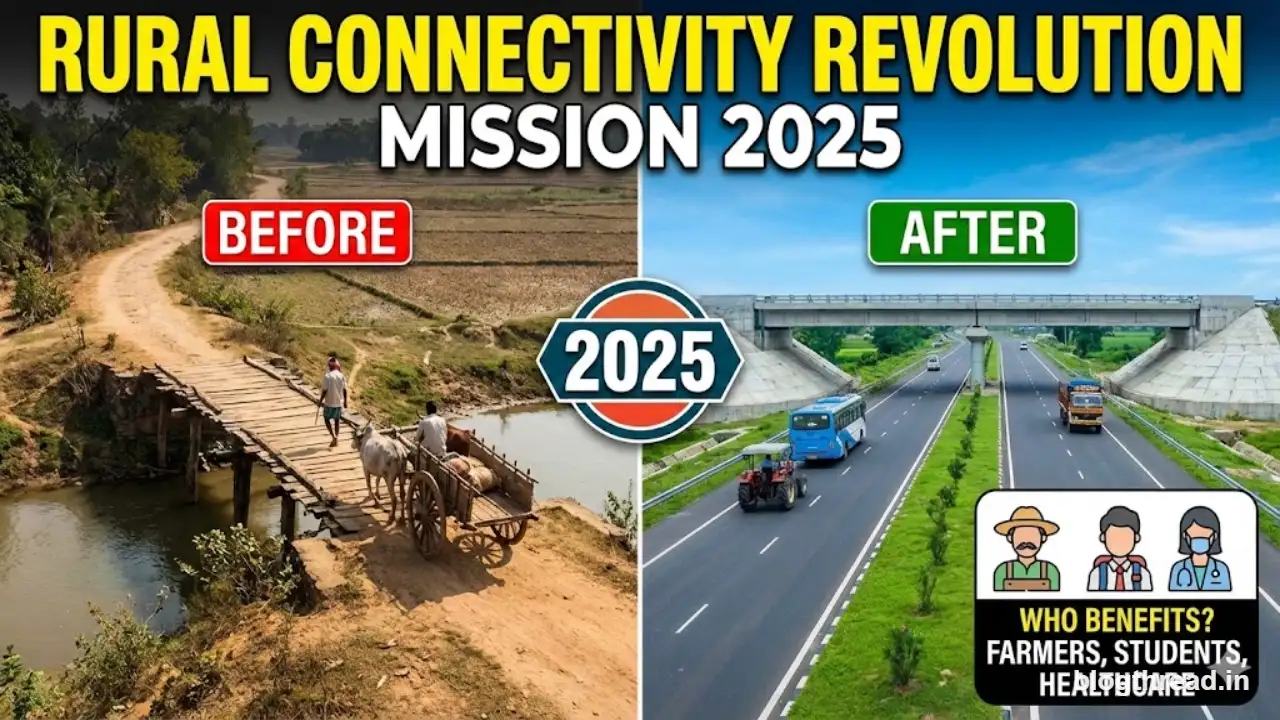
Why rural connectivity is the story of 2025
Across India’s villages, 2025 is shaping up as a watershed year for roads and bridges. With PMGSY’s next phase and national highway corridors expanding in parallel, the focus is squarely on all‑weather links that cut travel time and bring services closer. For crores of villagers, this is not just about tarmac—it’s about reaching a hospital in time, getting farm produce to mandi without losses, and making sure children don’t miss school in monsoon.
What’s new under PMGSY‑IV
The latest phase targets fresh connectivity for 25,000 unconnected habitations with about 62,500 km of all‑weather rural roads planned through 2028‑29. Crucially, bridges will be built or upgraded along these alignments so that connectivity does not collapse at river crossings during rains. The total outlay crosses ₹70,000 crore for this tranche, reinforcing the long‑term shift from kuccha tracks to resilient rural networks.
- Scope: new roads to remaining eligible habitations, plus required bridges on the same alignments.
- Outcome: market, school, and health facility access is baked into route selection, not left to chance.
- Funding: multi‑year support ensures states can plan and execute without stop‑start delays.
| PMGSY‑IV target | Planned impact |
|---|---|
| 62,500 km new roads | Connect 25,000 unconnected habitations |
| Bridges on these roads | All‑season links across rivers/streams |
Progress so far: bridges matter
As of mid‑2025, more than 1.9 lakh rural roads and over twelve thousand bridges have been sanctioned cumulatively under PMGSY, with a large majority already completed. The current year’s budgetary support around ₹19,000 crore keeps execution steady, while Phase‑III continues to upgrade through‑routes to mandis, schools, and hospitals. In short: not only are new roads being added, existing lifelines are being strengthened with stronger culverts and long‑span bridges.
Bharatmala’s role: tying villages to corridors
While PMGSY stitches together habitations, Bharatmala expands high‑speed corridors and feeder links that reduce logistics costs and connect rural belts to national markets. With tens of thousands of kilometres awarded and substantial stretches completed, border, tribal and aspirational districts are seeing safer bridges, bypasses and interchanges. For rural producers, this translates into better prices and faster input delivery—fertiliser, seeds, machinery, and even emergency services.
- Economic corridors bring mandi and warehouse access closer to blocks and tehsils.
- Border and hill districts gain safer bridges and shorter routes for essential supplies.
- Lower travel time reduces spoilage for perishable farm goods and dairy.
| Programme | What it does for villages |
|---|---|
| PMGSY | Last‑mile all‑weather roads and bridges to habitations |
| Bharatmala | Highways, bypasses and interchanges that pull villages into bigger markets |
Who benefits the most in 2025?
Three groups stand out: small farmers, school‑going children, and patients in remote blocks. For farmers, every kilometer saved to the nearest GrAM (Gramin Agricultural Market) can mean fresher arrivals and better auction prices. For students, consistent bus access—especially across monsoon—directly lifts attendance and exam outcomes. And for patients, an all‑weather bridge can be the difference between a risky detour and a timely ambulance run.
- Small/tenant farmers: quicker mandi access, lower transport costs, fewer post‑harvest losses.
- Women and children: safer, dependable rides to schools, anganwadis, and health centres.
- Tribal and hill communities: year‑round connectivity despite streams and landslide‑prone stretches.
| Beneficiary | Real‑world gain |
|---|---|
| Farmers | Better prices, predictable logistics, access to inputs |
| Students | Higher attendance, reduced monsoon drop‑offs |
| Patients | Faster emergency care, reliable referral transport |
How route selection is getting smarter
PMGSY‑III set the template by prioritising through‑routes to markets, higher secondary schools and hospitals; PMGSY‑IV builds on it and plugs remaining gaps. States use digital monitoring and geo‑tagging to track works, while maintenance is bundled for initial years so roads don’t crumble after the first monsoon. This sharper planning ensures that each new bridge multiplies social benefits across education, health and commerce.
Jobs and local enterprise: beyond construction
Road and bridge projects generate lakhs of person‑days during construction, but the sustained impact is in micro‑enterprise growth: transport services, cold‑chain pickups, dairy routes, agro‑processing and rural tourism. Better links also improve delivery of government services—PDS, vaccines, and emergency relief—making villages more resilient to shocks.
What to watch in your district
Keep an eye on district‑level PMGSY dashboards for sanction and completion status of your panchayat roads and bridges. If you’re a farmer collective or FPO, map your nearest GrAM and cold storage and petition the district for route prioritisation. Parents and school committees can lobby for safer bus bays and pedestrian stretches while bridges are being designed.
Bottom line
Mission 2025 for rural connectivity is about turning temporary tracks into permanent lifelines. With PMGSY‑IV unlocking fresh roads and bridges and Bharatmala knitting villages to national corridors, the biggest winners will be families who depend on timely market runs, school attendance, and emergency care. In the coming monsoons, fewer cut‑offs and quicker turnarounds could be the most visible sign that rural India is truly on the move.

0 Comments
No comments yet. Be the first to share your thoughts!